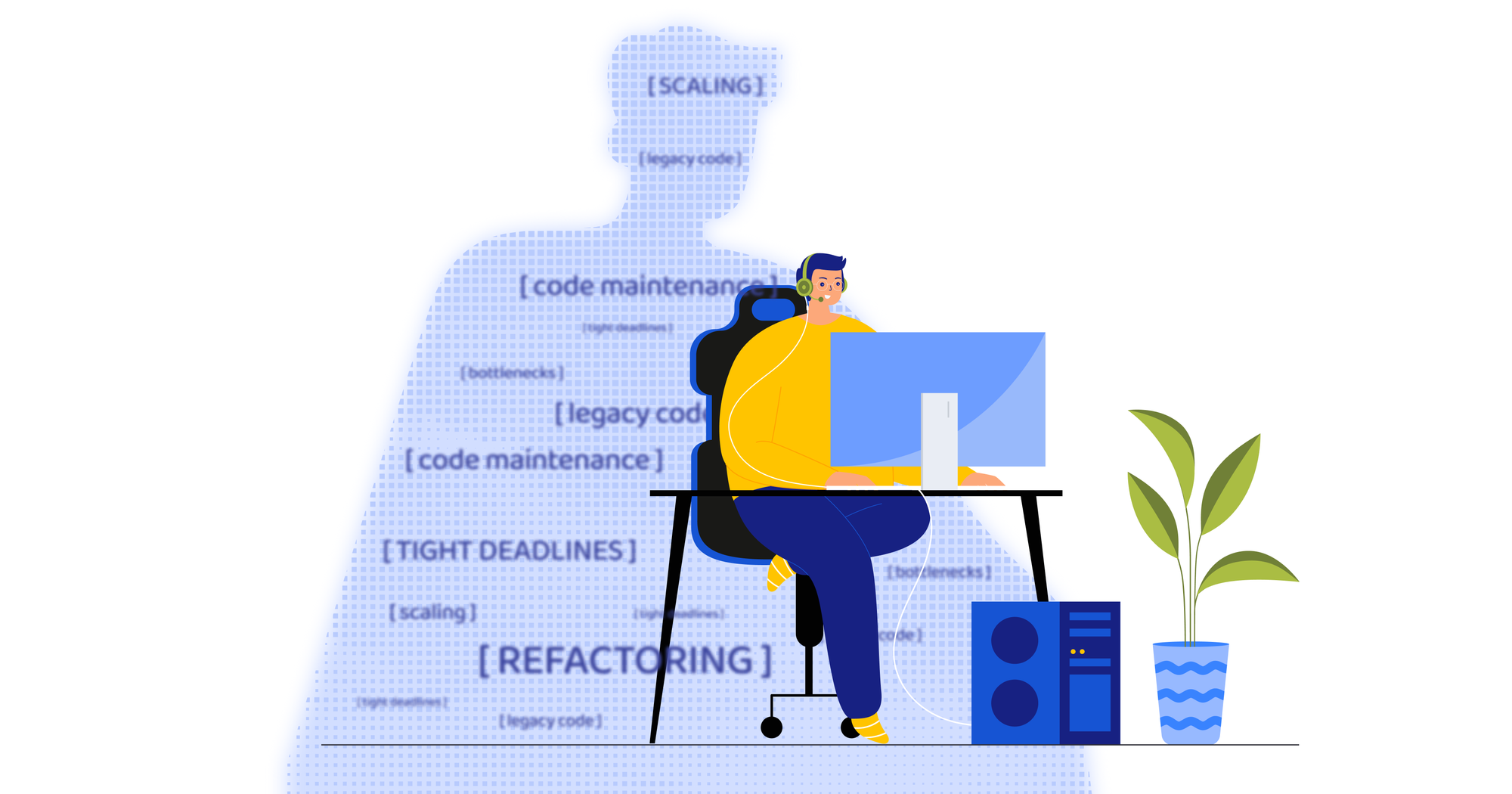
Code has two lives. There’s the moment it’s written, and then there’s everything that comes after: the years of reading it, changing it, fixing it, and extending it. AI has made the first part radically cheaper. The second part, not so much, and in some cases it’s made it more expensive. And it’s in that gap that the problems hide, the ones you can’t see at the start.
Generating working code today is fast and cheap. Even a manager can throw together a functional prototype in an evening, and a team can close out a feature in hours instead of days. This is a genuine breakthrough, and there’s no sense in turning your back on it.
But “it works” is a starting point, not a finish line. Code that works and code that will last look identical at the outset: both compile, both pass the tests, and both do what they’re supposed to in the demo. The difference shows up somewhere around month six, when a simple change suddenly breaks the modules next door.
What the numbers show
This isn’t a feeling; it’s a measurable trend. GitClear’s analysis of 211 million changed lines of code found that duplicated code blocks rose eightfold during 2024, while short-term “churn,” code that has to be rewritten soon after it’s written, also climbed. Put simply: more copy-paste, less coherent architecture.
The reason is that AI optimizes for “right now.” It’s brilliant at answering “How do I make this work?” but it never asks the next question: “How will this affect the rest of the system a year from now?” And that’s exactly what decides whether code lives or dies: what architecture to lay down, what not to build at all, how to keep a system coherent when it’s written half by people and half by agents.
And it shows. Sonar asked 1,149 developers: 96% said they don’t fully trust that AI-generated code actually works, and 38% said reviewing it is harder work than reviewing a colleague’s. Generation speed only becomes an advantage in the hands of someone who can filter out the noise and integrate what matters.
This isn’t a call to abandon AI. We use it ourselves every day, and it makes us faster. It’s about the fact that AI has raised the price of the things it can’t do on its own: technical taste, architecture, and accountability over the long haul.
What to ask before you commission
So if you’re commissioning development, the most useful question is no longer “How fast can you build it?” but “What happens to this code a year from now, when the product has grown?” Because the code that works, you can get in an evening. And the code that will last is still work that doesn’t fit into a single prompt.